PDF Ebook Principles of Human Knowledge and Three Dialogues Between Hylas and Philonous (Penguin Classics), by George Berkeley
Once more, reviewing routine will consistently offer useful perks for you. You could not should invest often times to check out the publication Principles Of Human Knowledge And Three Dialogues Between Hylas And Philonous (Penguin Classics), By George Berkeley Just reserved numerous times in our extra or leisure times while having dish or in your workplace to read. This Principles Of Human Knowledge And Three Dialogues Between Hylas And Philonous (Penguin Classics), By George Berkeley will show you new point that you could do now. It will certainly aid you to improve the high quality of your life. Occasion it is simply an enjoyable e-book Principles Of Human Knowledge And Three Dialogues Between Hylas And Philonous (Penguin Classics), By George Berkeley, you could be healthier and also a lot more enjoyable to enjoy reading.
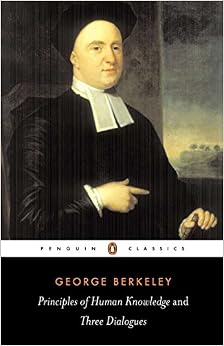
Principles of Human Knowledge and Three Dialogues Between Hylas and Philonous (Penguin Classics), by George Berkeley

PDF Ebook Principles of Human Knowledge and Three Dialogues Between Hylas and Philonous (Penguin Classics), by George Berkeley
That's it, a book to wait on in this month. Even you have wanted for very long time for releasing this publication qualified Principles Of Human Knowledge And Three Dialogues Between Hylas And Philonous (Penguin Classics), By George Berkeley; you may not have the ability to get in some stress. Should you walk around and also seek fro the book till you actually get it? Are you certain? Are you that totally free? This problem will certainly force you to constantly wind up to get a book. And now, we are pertaining to give you exceptional solution.
This book features the distinctive preference of guide created. The professional writer of this Principles Of Human Knowledge And Three Dialogues Between Hylas And Philonous (Penguin Classics), By George Berkeley has commonly makes an excellent book. Yet, that's not just around terrific book. This is additionally the problem in which guide provides really intriguing products to get over. When you actually intend to see just how this publication is offered and offered, you could sign up with a lot more with us. We will certainly offer you the web link of this publication soft documents.
Related to why this Principles Of Human Knowledge And Three Dialogues Between Hylas And Philonous (Penguin Classics), By George Berkeley exists initially here is that this referred book is the one that you are searching for, aren't you? Numerous are additionally same with you. They additionally seek for this wonderful book as one of the resources to check out today. The referred book in this kind is mosting likely to present the preference of expertise to acquire. It is not just the particular society however also for the public. This is why, you need to occur in gathering all lessons, and details regarding just what this publication has actually been composed.
By clicking the web link that we provide, you could take guide Principles Of Human Knowledge And Three Dialogues Between Hylas And Philonous (Penguin Classics), By George Berkeley completely. Link to web, download, as well as conserve to your gadget. What else to ask? Reviewing can be so easy when you have the soft data of this Principles Of Human Knowledge And Three Dialogues Between Hylas And Philonous (Penguin Classics), By George Berkeley in your device. You could additionally replicate the data Principles Of Human Knowledge And Three Dialogues Between Hylas And Philonous (Penguin Classics), By George Berkeley to your office computer system or in the house or perhaps in your laptop. Merely discuss this excellent news to others. Suggest them to visit this resource and also obtain their searched for publications Principles Of Human Knowledge And Three Dialogues Between Hylas And Philonous (Penguin Classics), By George Berkeley.
About the Author
George Berkeley (1685–1753) was an Irish philosopher best known for the advancement of a theory he called "immaterialism." He wrote A Treatise Concerning the Principles of Human Knowledge in 1710.Roger Woolhouse was educated at Dent’s School, Saltburn, and University College London. He has taught at University College Cardiff, the University of Pennsylvania and Princeton University, and is presently professor of philosophy at the University of York and visiting professor at Rutgers University. He is the author of Locke’s Philosophy of Science and Knowledge, Locke, The Empiricists, and Descartes, Spinoza, Leibniz. He has also edited Goerge Berkeley’s Principles of Human Knowledge and Three Dialogues Between Hylas and Philonous for Penguin Classics.
Read more
Product details
Series: Penguin Classics
Paperback: 224 pages
Publisher: Penguin Classics; Penguin Classics edition (July 5, 1988)
Language: English
ISBN-10: 9780140432930
ISBN-13: 978-0140432930
ASIN: 0140432930
Product Dimensions:
5.1 x 0.6 x 7.7 inches
Shipping Weight: 6.4 ounces (View shipping rates and policies)
Average Customer Review:
3.9 out of 5 stars
30 customer reviews
Amazon Best Sellers Rank:
#732,057 in Books (See Top 100 in Books)
Esse est percipi— “To be is to be perceived.â€That is immaterialism in a nutshell, but I found this quote from the THREE DIALOGUES BETWEEN HYLAS AND PHILONOUS to be both more comprehensive and more comprehensible: “There are only things perceived and things perceiving; or that every unthinking being is necessarily, and from the very nature of its existence, perceived by some mind; if not by any finite created mind, yet certainly by the infinite mind of God, in whom we live, move and have our being.â€The idea that nothing exists unless it is perceived opposes conventional thinking, even today.When reviewing a work of nonfiction, I take two things into consideration: the message and the delivery.If the message is unique, significant and most important, new, then it becomes the principal consideration in my review. On the other hand, if the subject is something we’ve all heard before, then the delivery becomes the paramount factor in my assessment.This was one of the hardest reviews I’ve written, and I’ve written many. I was considering giving the book three stars—a balance between the message (five stars) and the delivery (two stars), but this is a book that I recommend to anyone who thirsts for self-realization, and such an endorsement deserves no less than the highest rating.Therefore, I finally decided to base my rating on the subject of immaterialism, and my review on the method of delivery. I have never done this before, but I make an exception here because the message is truly a milestone in philosophy. It shakes the very foundations of human conditioning from the moment we are taught to utter our first words. George Berkeley came up with the idea of immaterialism despite the overwhelming prejudice of the period, the dogmas imposed by western society, the risk involved in introducing novel theories—never mind radical ones—and the difficulties of in acquiring and exchanging information and ideas in general.Now for my review, which is based solely on the delivery of the message.:The pros: of the prose.I found the THREE DIALOGUES BETWEEN HYLAS AND PHILONOUS easier to follow and a lot more entertaining than Berkeley’s previous work, A TREATISE CONCERNING THE PRINCIPALS OF HUMAN KNOWLEDGE.Philonous comes from the Greek word, and literally translates to “friend of mind.†Hylas is another word from Greek, which means “matter.†Mind versus matter. Immaterialism versus materialism. Cute. A little too cute.But then again, they didn’t name a city, a famous university, a library, and an Episcopal seminary after Berkeley for his writing skills.Speaking of prose, though the language is bombastic and at times convoluted, this book makes for an easier read than his previous work.One must be careful, however: this text was written several centuries ago, and many words had different meanings back then.For instance, “vulgar,†in old English, means common, not coarse or rude. And by the word “repugnant,†George Berkeley is referring to the archaic “given to stubborn resistance,†rather than the modern understanding of the word: “extremely distasteful.â€Archaic vocabulary notwithstanding, the aggressive courtroom style back and forth between the two fictitious characters feels more like an argument than a philosophical discussion. I don’t know if Berkeley did this intentionally—perhaps to make the text more interesting—or if this seemingly rude discourse was the standard in communication among the educated and upper class of that era.The dialogue is a fiction through which George Berkeley attempted to make his immaterialism more palpable to the reader. The great philosopher succeeded in this regard to a significant degree. I found clarification to many questions that arose after reading his first book, A TREATISE CONCERNING THE PRINCIPALS OF HUMAN KNOWLEDGE. Using dialogue in the new version made the language far easier to understand. He also stretched out many subjects and approached numerous ideas from different angles.The cons:Philonous (the character supporting Berkeley’s immaterialism) is portrayed as this genius with an unfailing understanding of, well, everything, whereas poor Hylas, though apparently educated, and of commensurate class–very important in those days–carries his arguments with comparatively diminished clarity and eloquence. It’s akin to a debate between Stephen Hawking and an eighth-grade physics teacher on string theory versus loop quantum gravity.Hylas often raises the same objections over and over again, only varying the questions slightly. And every time Philonous counters, Hylas concedes.Rarely does Hylas challenge Philonous with a difficult question, especially in the first two dialogues.Given Hylas’ intellectual ineptitude, and Bishop Berkeley’s deep Christian convictions, one would think the author would have endowed his fictitious counterpart, Philonous, with commensurate compassion. But alas, Philonous though made to appear so wise, shows no heart.Passion yes. Compassion no.That put me off, I must admit.To conclude:I recommend this book to anyone interested in exploring the beginnings—and indeed, what some consider the foundations of—a major internal shift through immaterialism. Despite it’s many failings as a book, the delivery is clearer and covers more ground than his previous work. In short, you’ll get the message, and in the final analysis, that’s what really matters.
Needed for a class and came quickly and brand new.
Received in excellent condition. The Dialogues are a classic of Western philosophy.
I really enjoyed reading Berkeley. He has a nice clean way of writing. Still not convinced of his conclusions.
As advertised
Interesting philosophical questions. Relatively easy read.
This is a good foundation book for anyone who is a Non Dual seeker.
This is a wonderful little book. However clever Kant may have been, prose style took a turn for the worse in his systematic treatment. Berkeley, by contrast, is a great writer, and these dialogues brim with wit and charm.Many of the arguments that Berkeley puts forward in these dialogues will seem very strange to a modern reader who is used to the discoveries of the natural sciences; and it is certainly true that many of Berkeley’s arguments against materialism are fallacious. Nonetheless, Berkeley’s thinking was a giant leap forward from Locke’s (whose position is represented by Hylas), and is in many ways strikingly modern.Here is the best way I can frame it for the philosophical debuttante. Philosophers have long had the nasty habit of positing unknowable metaphysical entities to account for the world. In Aristotelian and Cartesian conceptions, this was simply ‘substance’; in Leibniz, it was the ‘monads’; in Locke—Berkeley’s main opponent—it was ‘primary qualities’; and in Kant, it was ‘noumena’. These entities are, as it were, conjured up by the philosopher’s magic wand to account for the existence of matter, as an underlying substratum that is forever unknowable to us puny mortals.Berkeley pulls this position to pieces, and for good reason. Why conjure up a mysterious ‘substance’ or ‘primary quality’ with no discernible characteristics? It is only a name we give to the unknown. Instead, Berkeley argues, we should concentrate on what we can access with our senses. ‘Matter’ is not some ghost-like thing without extension of weight, but is instead what we normally take for granted as matter—something with weight, extension, that exists in space and time.Believe it or not, Hylas's argument was the same intellectual trap that Immanuel Kant fell into almost one hundred years later when he posited the unknowable ‘things-in-themselves’ (or noumena) that do not exist in space or time. If you substitute ‘noumena’ for ‘matter’ in these dialogues, you can see how far ahead of his time was Berkeley. Indeed, near the beginning of the 20th century, Edmund Husserl and Bertrand Russell—two of the most influential philosophers of the last 100 years—held a similar position, known as phenomenalism. Such a perspective is also conducive to science, because it shifts the emphasis away from metaphysics to physics.To sum up, Berkeley is a great writer and a penetrating thinker. The dialogues are short and entertaining; and, when stripped of some of their fallacies, most of his arguments still relevant today.
Principles of Human Knowledge and Three Dialogues Between Hylas and Philonous (Penguin Classics), by George Berkeley PDF
Principles of Human Knowledge and Three Dialogues Between Hylas and Philonous (Penguin Classics), by George Berkeley EPub
Principles of Human Knowledge and Three Dialogues Between Hylas and Philonous (Penguin Classics), by George Berkeley Doc
Principles of Human Knowledge and Three Dialogues Between Hylas and Philonous (Penguin Classics), by George Berkeley iBooks
Principles of Human Knowledge and Three Dialogues Between Hylas and Philonous (Penguin Classics), by George Berkeley rtf
Principles of Human Knowledge and Three Dialogues Between Hylas and Philonous (Penguin Classics), by George Berkeley Mobipocket
Principles of Human Knowledge and Three Dialogues Between Hylas and Philonous (Penguin Classics), by George Berkeley Kindle
0 Reviews:
Posting Komentar